When producing custom enamel pins, clients sometimes notice that the final product looks slightly different from their digital artwork.
As an experienced enamel pin manufacturer, we can confirm:
minor color variation is normal in enamel pin manufacturing.
Understanding why this happens helps you avoid confusion and achieve better enamel pin color matching.
1. RGB vs Pantone Colors
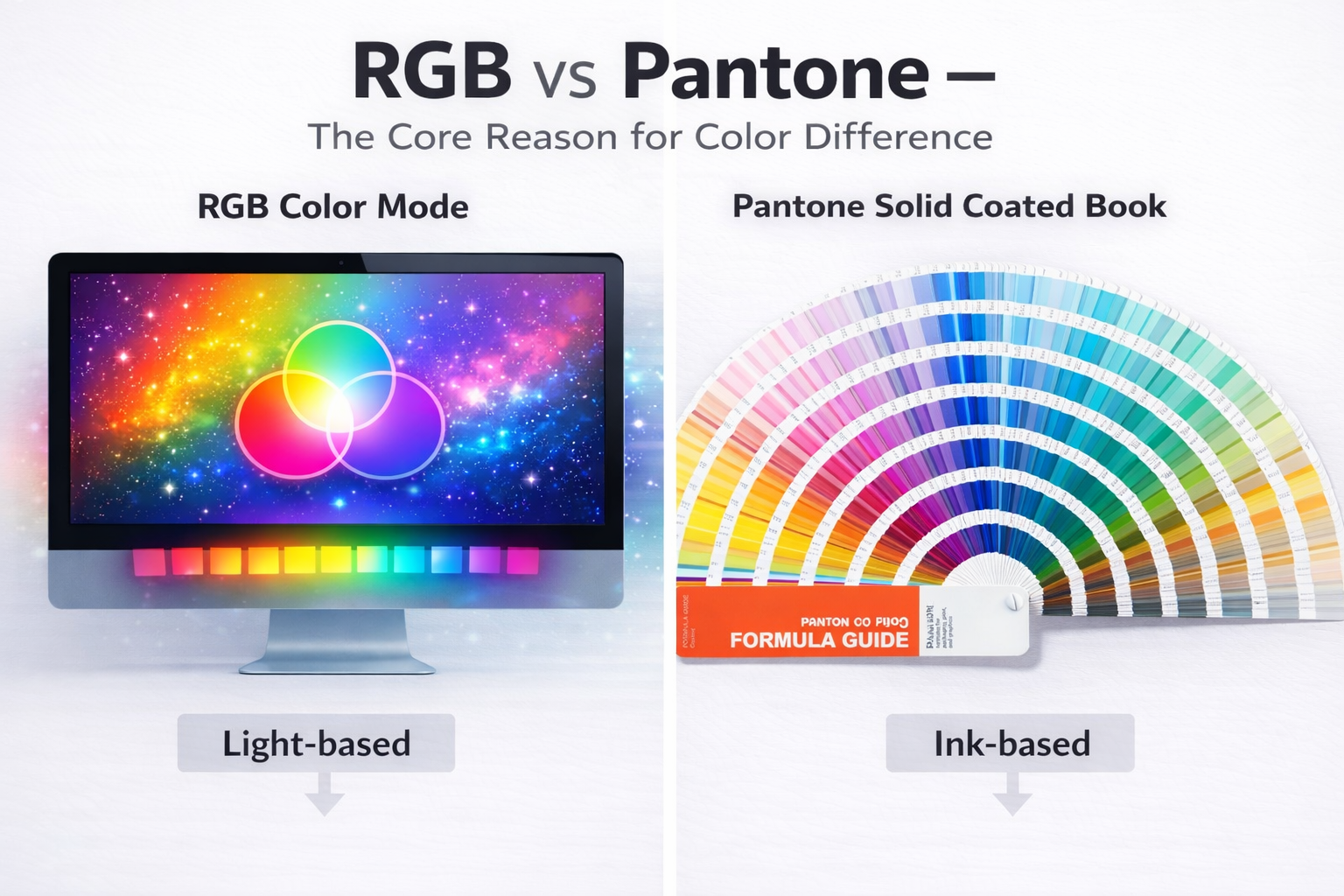
Most artwork is created in RGB color mode.
However, custom enamel pins are produced using Pantone solid colors, not RGB.
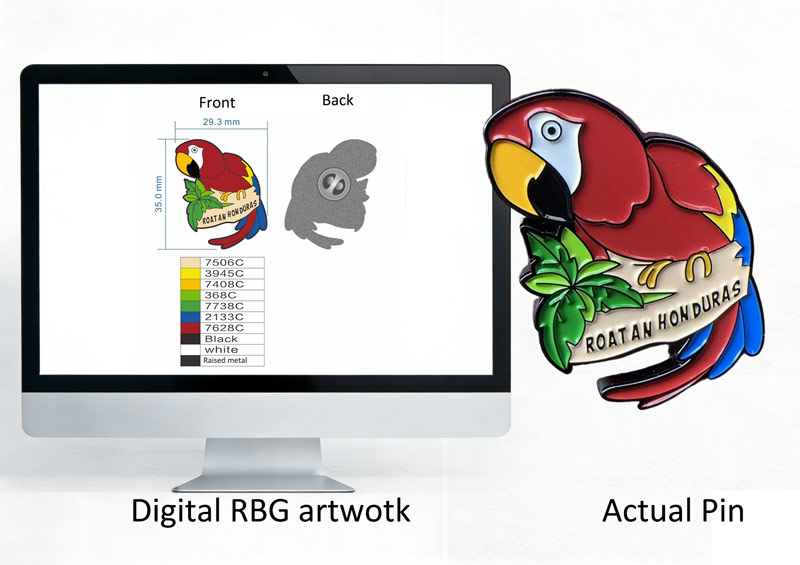
Screens generate color using light.
Enamel pins use physical pigments filled into metal lines.
Because of this difference, enamel pin colors on screen will never be 100% identical to physical enamel paint.
For accurate enamel pin production, always provide Pantone color codes instead of RGB values.
2. Are There Different Versions of Pantone Colors?
Yes — and this is an important detail in enamel pin color matching.
Pantone provides multiple color systems, including:
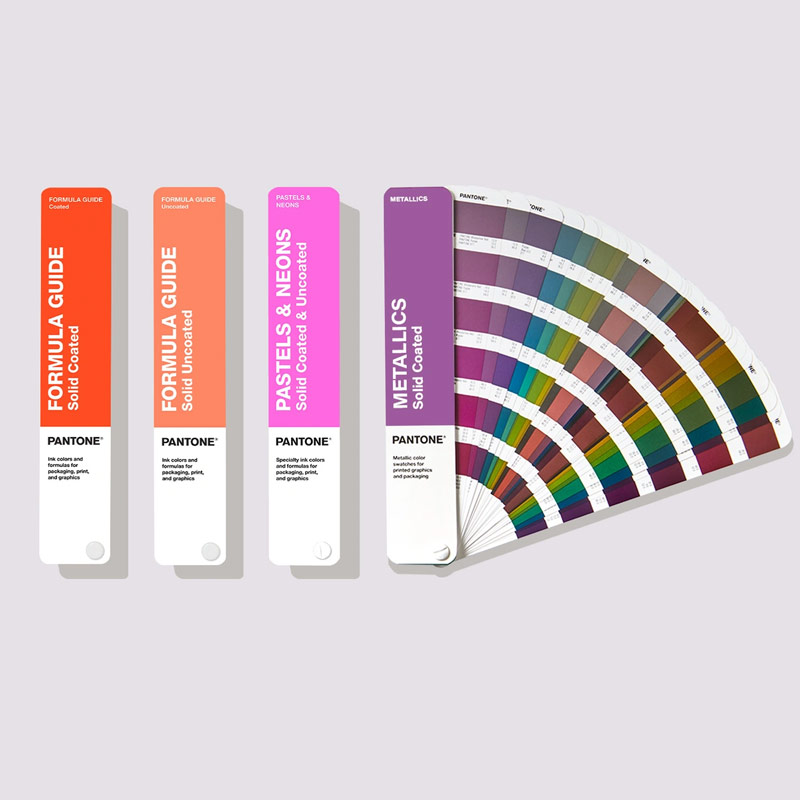
- Pantone Solid Coated (C)
- Pantone Solid Uncoated (U)
In enamel pin manufacturing, the industry standard is Pantone Solid Coated (C).
After baking, enamel paint has a glossy surface, similar to coated paper.
If a designer selects Pantone Uncoated (U) but production follows Pantone Coated (C), the final enamel pin colors may appear slightly stronger or deeper.
To reduce color differences in custom enamel pins, always confirm you are using Pantone Solid Coated (C).
3. Metal Plating Affects Enamel Pin Colors
Metal plating significantly influences how enamel pin colors appear.
Common plating options include:
- Gold plating
- Silver plating
- Black nickel plating
- Antique finishes
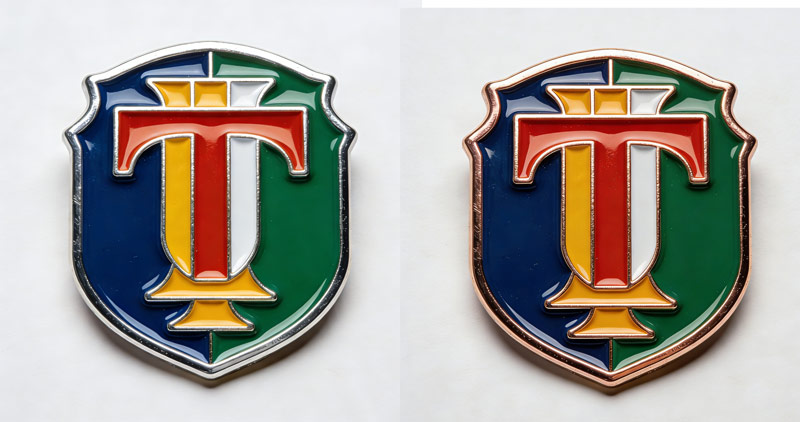
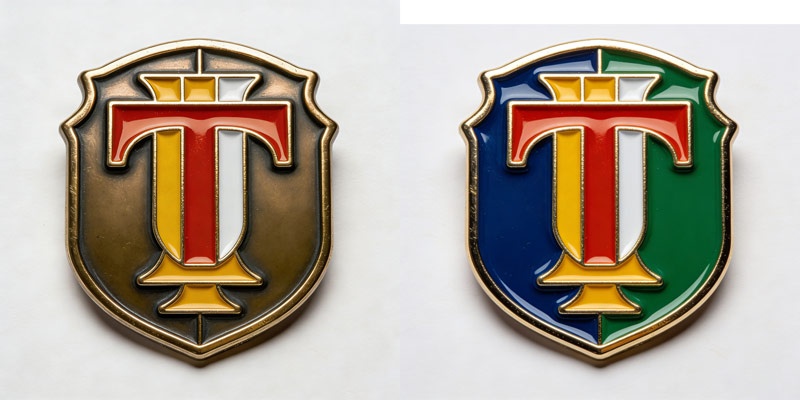
Gold plating adds warmth to enamel colors.
Silver plating keeps tones more neutral.
Black nickel can make colors appear darker and higher contrast.
This is why plating selection is part of professional enamel pin manufacturing.
(Internal link suggestion: link to your article about choosing the right metal finish for enamel pins.)
4. Soft Enamel vs Imitation Hard Enamel
Different enamel processes reflect light differently.
- Soft enamel pins have recessed color areas
- Imitation hard enamel pins are polished flat
Even with the same Pantone number, enamel pin colors can look slightly different due to surface texture and light reflection.
This is a process difference — not a production mistake.
If you’re unsure which process suits your design, you can read our detailed comparison of Soft Enamel vs Imitation Hard Enamel.
5. Baking & Production Factors
During enamel pin production:
- Colors are baked at high temperature
- Pigments naturally settle
- Gloss levels change after curing
These standard industrial steps may slightly adjust the final enamel pin colors.
This is normal in enamel pin manufacturing and within acceptable tolerance.
How to Achieve Better Enamel Pin Color Matching
To reduce color variation when ordering custom enamel pins:
✔ Provide Pantone Solid Coated (C) codes
✔ Confirm metal plating before production
✔ Understand process differences (soft vs hard enamel)
✔ Request pre-production photos
✔ Work with an experienced enamel pin manufacturer
Clear communication ensures more accurate enamel pin color results.
Conclusion
Slight differences between artwork and finished custom enamel pins are a natural part of enamel pin manufacturing.
Because enamel pins use physical pigments, metal plating, and high-temperature baking, exact digital duplication is impossible.
However, with correct Pantone selection, proper plating choice, and professional production control, enamel pin colors can closely match your original design.
Understanding the process leads to better results.